
Homeowners' pick for heating and cooling across north Florida and the Suwannee Valley
No Heat at All
You woke up and the house is cold. The thermostat says heat, the vents are blowing nothing, or blowing air that feels like the garage. We handle no-heat calls on heat pumps and furnaces across Florida, Georgia and South Carolina. Start with the three safe checks below, then call us for heating repair if the house is still cold.
Call (888) 381-2953- Real people on the phone
- 7 days a week
- Quote in writing before any work
Taking calls until 5:00 PM ET
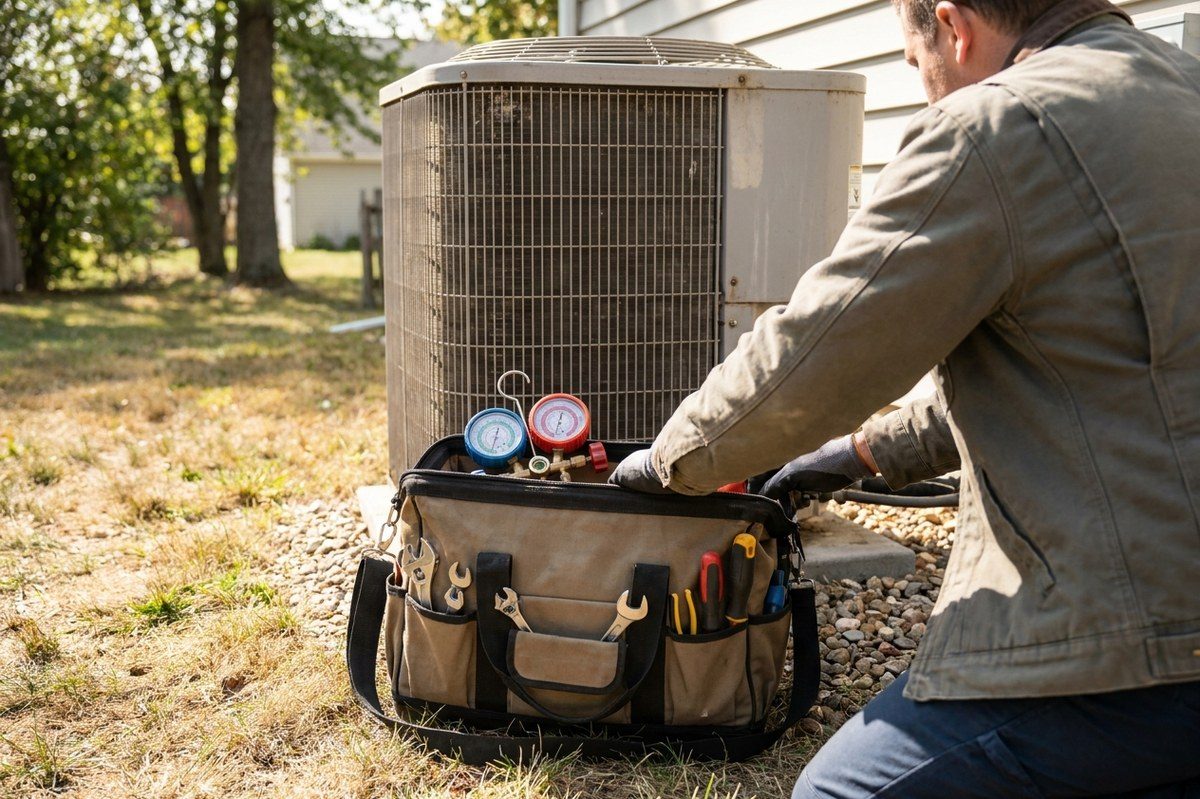
By the Suwannee Valley AC & Heating service team · reviewed by our working technicians
What "no heat at all" usually means
There is a difference between weak heat and no heat, and it matters for diagnosis. Weak heat means the system runs but cannot keep up, which often points to a failing compressor, low refrigerant charge or a stuck reversing valve on a heat pump. No heat at all means the call for heat is not being answered. Either the thermostat is not sending the signal, the equipment is not getting power, or a safety device has shut the system down on purpose. Safeties trip for a reason. When we arrive we want to know which one tripped and why, not just reset it and drive away. If you smell gas at any point, leave the house first, call 911 or your gas utility from outside, then call us.
Cause family one: thermostat and power
This is the cheapest family and the most common, so it goes first. Dead thermostat batteries stop the signal cold. A thermostat bumped from HEAT to COOL or OFF does the same thing, and so does a schedule someone programmed last spring and forgot about. On the power side, look for a tripped breaker at the panel and check for a separate switch near the indoor unit that looks like a light switch. Many homes on our rural routes have that switch in an attic or a closet where it gets flipped by accident. If a breaker trips again after you reset it once, stop and call us. Repeat tripping is a fault, not a nuisance.
Cause family two: airflow and filters
A filter packed with dust and dog hair starves the blower, and on a furnace that overheats the heat exchanger until a limit switch shuts the burner off. You get a few minutes of heat, then nothing, then maybe heat again later. On a heat pump, blocked airflow shows up as short cycling and lukewarm air. Change the filter and see what the old one looks like. Walk the house and confirm supply and return vents are open and not blocked by furniture or a rug. Outside, clear leaves, grass clippings and sand away from the outdoor unit so it can breathe. Sandy yards around here bury the base of a heat pump faster than people expect.
Cause family three: ignition, controls and refrigerant
Past filters and power, we are into parts that need meters and gauges. On gas furnaces the usual suspects are a failed igniter, a flame sensor coated in residue, a bad gas valve, a pressure switch reading a blocked flue, or a control board that no longer sequences the start. On heat pumps, no heat can come from a failed reversing valve, a bad defrost board, a contactor that will not pull in, or a refrigerant charge low enough that the outdoor unit gives up in cold weather. None of this is homeowner work. Gas, refrigerant and high-voltage components carry real risk, and guessing at parts gets expensive fast.
What a technician does differently
We start by reading the equipment instead of the symptom. Diagnostic lights and error codes on the control board tell us which safety opened. We check voltage at the board, at the transformer and at the thermostat wire to find where the signal dies. On a furnace we watch a full ignition sequence and test the flame sensor current. On a heat pump we measure amp draw, check the defrost cycle and take pressures and temperatures to see whether the charge and the reversing valve are doing their jobs. Then we tell you what failed, what it takes to fix it, and whether the rest of the system has life left in it. Call us for heater repair anywhere across the region.
No Heat at All — common questions
Why is my heat pump blowing cool air when the thermostat is set to heat?
Often it is a defrost cycle, which is normal and lasts a few minutes. If it stays cool, the reversing valve, defrost control or refrigerant charge is likely the problem. That needs a technician with gauges, not a reset.
Should I use emergency heat while I wait?
Yes, if your thermostat has it. Emergency heat uses electric strips and will warm the house, though it costs more to run. Switch back once we have the heat pump working again, and tell us you were running on it.
My furnace runs a few minutes then quits. What is that?
That pattern usually means a safety limit is tripping, commonly from restricted airflow or a flame sensor problem. Change the filter and confirm vents are open. If it repeats, stop cycling it and call us for furnace repair.
How it works
- Step 1
Tell us the symptoms
You describe what changed. No cold air, a breaker that keeps tripping, water near the air handler, a smell, a noise. That gives us a head start on parts before we ever leave the shop.
- Step 2
We diagnose on site
A technician checks the thermostat, the electrical side, airflow through the filter and coil, refrigerant behavior and the outdoor unit. We look at the whole system, because a frozen coil usually points somewhere else.
- Step 3
You decide the repair
We explain what failed, what it takes to fix it, and how long the rest of the system is likely to hold up. You pick the repair. We do not start work you did not approve.
- A real person answers
- Open 7 days
- Written quote before work starts
Why homeowners call us
- Rural routes are normal for usWe drive long stretches between calls and we plan for it. Trucks carry the common heat pump and air conditioner repair parts so a diagnosis does not turn into a second trip on a hot afternoon.
- Heat pumps and sandy soilMost homes we visit run a heat pump, and sand, lawn clippings and pollen pack the outdoor coil fast. We clear it, check the defrost side in winter, and show you what we found before we close it up.
- Well water housesHomes on well water bring their own quirks, from pump-driven electrical noise to hard water on drain lines and condensate pans. We know where those systems clog and where the slow leaks hide.
- Heating repair tooCold snaps in this region are short and hard. We do heating repair and heater repair on heat pumps, strip heat and furnaces, so one crew handles your system in July and again in January.
- All major brands, gas & electricOne independent crew for Carrier, Trane, Lennox, Goodman, Rheem and more.
- Straight answersIf a system is not worth repairing, we say so, often right on the phone.
About this guide
When the easy checks change nothing, it's time for a tech
Bring your notes from the checks to the call and booking takes no time.
- A real person answers
- Open 7 days
- Written quotes
- All major brands
- Gas & electric
Rather not call? Get a free quote →