
Homeowners' pick for heating and cooling across north Florida and the Suwannee Valley
Sealing Ducts vs Replacing Them
Your rooms never even out, the AC runs and runs, and someone told you the ductwork is the problem. Now you have to decide: seal what you have, or pull it and start over. We look at duct systems every week across Florida, Georgia and South Carolina, and the answer usually comes down to a few things you can see and touch in the attic or crawlspace.
Call (888) 381-2953- Real people on the phone
- 7 days a week
- Quote in writing before any work
Taking calls until 5:00 PM ET
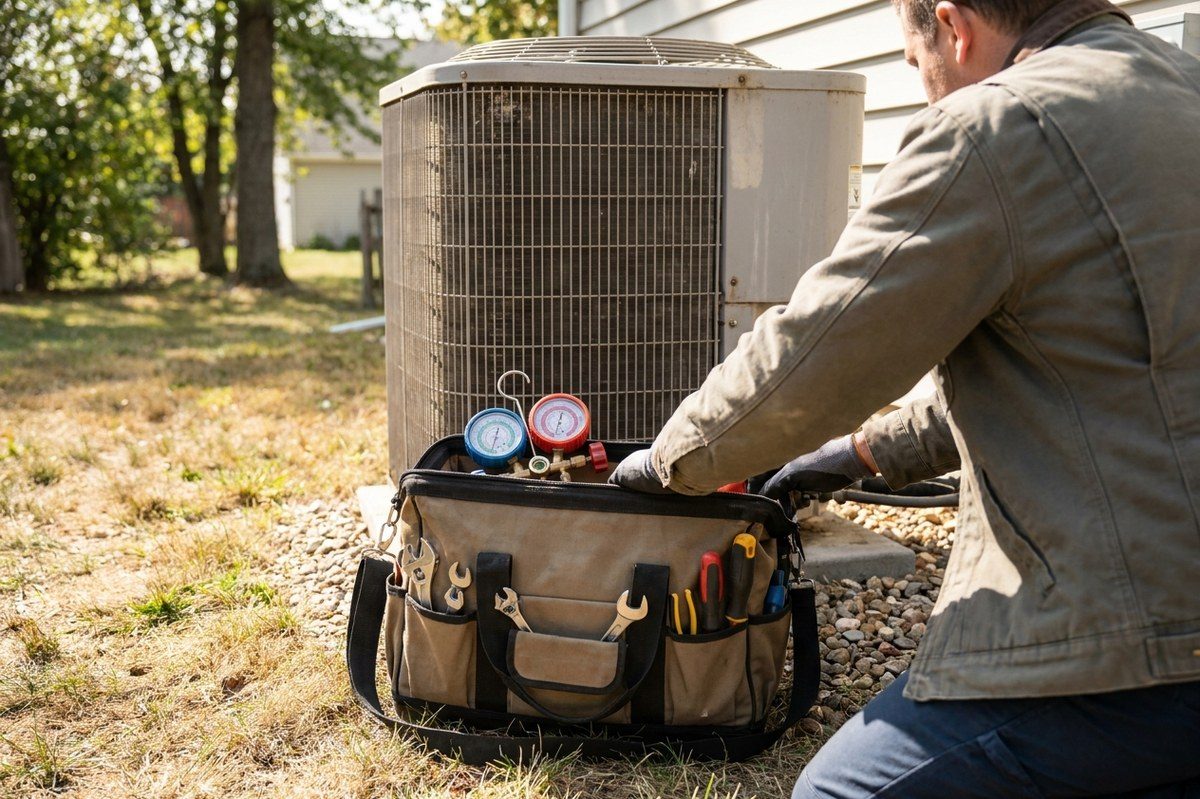
By the Suwannee Valley AC & Heating service team · reviewed by our working technicians
The Factors That Actually Decide It
Four things matter. Age, because flex duct has an inner liner and an outer jacket that both give up eventually. Fault type, because a pulled connection at a boot is a different animal than a liner torn along its whole length. Parts and fittings, because odd sizes and old rigid trunk transitions sometimes cannot be matched without rebuilding a section anyway. And sizing, because sealing a duct that was never big enough for the airflow only makes the pressure problem louder. If three of those four point the same direction, the decision is already made before we quote anything.
How We Read The System On A Visit
We start at the air handler and work outward. We look at the plenum connections, the takeoffs, the boots where duct meets ceiling or floor, and the long runs that sag between supports. Sagging matters more than homeowners expect, because a duct that dips holds condensation and pulls the joints apart over time. In humid parts of the region we also check insulation for wet spots and staining. Then we compare what we see against what you told us. If the far bedroom is the complaint and the far bedroom run is crushed behind a truss, that is the story.
When Sealing Is The Right Call
Sealing wins when the duct body is sound and the leaks are at the joints. That is the most common case we find. Boots pull loose from ceiling drywall, takeoffs work themselves off the trunk, and old tape lets go while the duct itself is still flexible and intact. In those homes we reseal the connections properly, add support where runs are sagging, and repair insulation. You feel the difference in the rooms farthest from the air handler first. Sealing also makes sense when a system is otherwise healthy and you are not planning any equipment work soon.
Honest Cases Where Replacement Wins
Some duct systems are past repair and we will tell you so. Inner liners that crumble when handled, jackets torn open along multiple runs, ducts that have been wet long enough to grow something, and rodent damage in rural crawlspaces all point to replacement. So does a layout that was wrong from the start, with undersized runs or a return that cannot feed the equipment. If we are replacing equipment anyway, redoing bad duct at the same time avoids paying twice for the same access. Patching a system with a dozen failures is money spent to buy a short delay.
Deciding Without Second-Guessing Yourself
Ask for specifics. Which runs are bad, what the fault is on each, and what changes if you only fix the worst two. A repair plan should name locations, not just say the ductwork is leaky. If a full replacement is recommended, ask what makes the existing duct unusable rather than merely tired. We are comfortable doing partial work when partial work solves your complaint, and we will say plainly when it will not. Before we come out, you can change the filter, confirm vents are open in the rooms you use, and note which rooms disappoint you most.
Sealing Ducts vs Replacing Them — common questions
Can leaky ducts make my AC repair bills higher?
They can. Duct leaks and crushed runs cut airflow, which makes the equipment work longer and run in conditions it was not designed for. That stress shows up eventually as air conditioning repair calls on the equipment itself.
Do I have to replace all the ductwork or can we do part of it?
Partial replacement is common and often the right answer. If two runs are torn and the rest is sound, we replace those two and seal the rest. We tell you when a full replacement is genuinely the better path.
How long does duct repair take?
Sealing joints and supporting sagging runs in an average home is usually a same-day job. Full replacement depends on attic or crawlspace access and how many runs there are, and typically takes longer than one visit.
How it works
- Step 1
Tell us the symptoms
You describe what changed. No cold air, a breaker that keeps tripping, water near the air handler, a smell, a noise. That gives us a head start on parts before we ever leave the shop.
- Step 2
We diagnose on site
A technician checks the thermostat, the electrical side, airflow through the filter and coil, refrigerant behavior and the outdoor unit. We look at the whole system, because a frozen coil usually points somewhere else.
- Step 3
You decide the repair
We explain what failed, what it takes to fix it, and how long the rest of the system is likely to hold up. You pick the repair. We do not start work you did not approve.
- A real person answers
- Open 7 days
- Written quote before work starts
Why homeowners call us
- Rural routes are normal for usWe drive long stretches between calls and we plan for it. Trucks carry the common heat pump and air conditioner repair parts so a diagnosis does not turn into a second trip on a hot afternoon.
- Heat pumps and sandy soilMost homes we visit run a heat pump, and sand, lawn clippings and pollen pack the outdoor coil fast. We clear it, check the defrost side in winter, and show you what we found before we close it up.
- Well water housesHomes on well water bring their own quirks, from pump-driven electrical noise to hard water on drain lines and condensate pans. We know where those systems clog and where the slow leaks hide.
- Heating repair tooCold snaps in this region are short and hard. We do heating repair and heater repair on heat pumps, strip heat and furnaces, so one crew handles your system in July and again in January.
- All major brands, gas & electricOne independent crew for Carrier, Trane, Lennox, Goodman, Rheem and more.
- Straight answersIf a system is not worth repairing, we say so, often right on the phone.
About this guide
When the easy checks change nothing, it's time for a tech
Tell us what you tried and what it did. The booking itself takes a minute.
- A real person answers
- Open 7 days
- Written quotes
- All major brands
- Gas & electric
Rather not call? Get a free quote →